4.3.3 Annual Tests
5.3.3.1* An Annual test of each pump assembly shall be conducted under minimum, rated and peak flows of the fire pump by controlling the quantity of water discharged through approved test devices. This test shall be conducted as described in 5-3.3.1(a), (b), or (c).
Exception*: If available suction supplies do not allow flowing of 150 percent of the rated pump capacity, the fire pump shall be operated at maximum allowable discharge. This reduced capacity shall not constitute a noncompliant test.
5-5 Maintenance
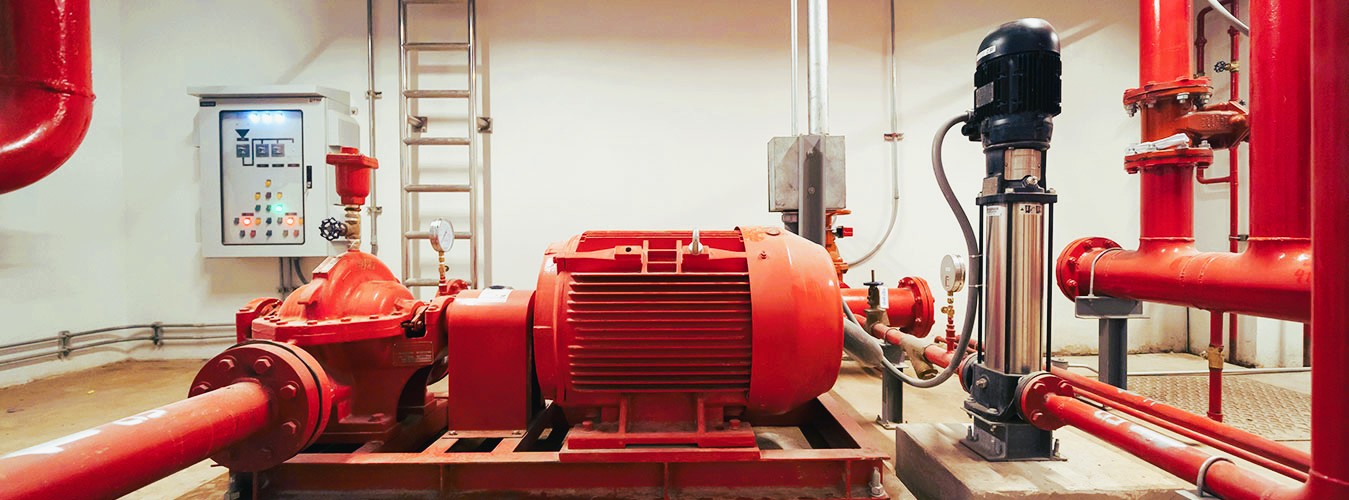
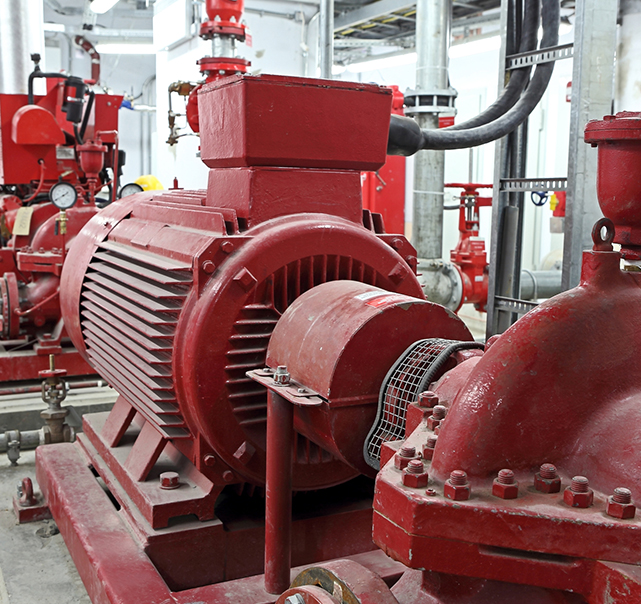
The Fire Pump installed in your premise must be maintained in proper working order and records of its maintenance must be kept on-site. Any malfunction of a fire pump must be immediately rectified by a qualified representative.
Contact us for your annual servicing or replacement to ensure compliance with BC Fire Code, BC Building Code & Vancouver Building By Law.
FAQ
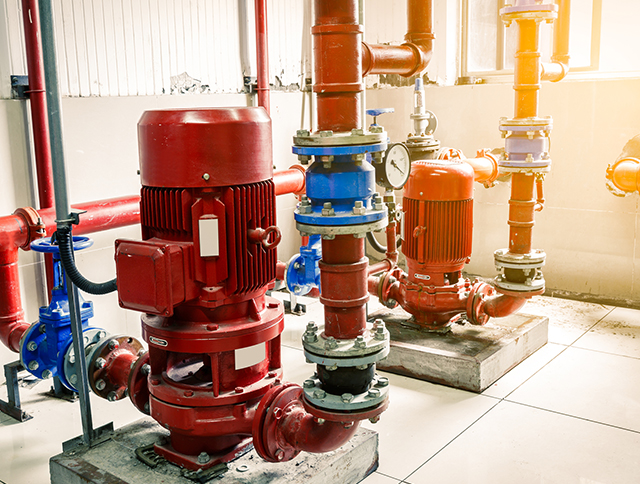
A fire pump is a vital part of a building’s fire protection system. Its primary job is to increase water pressure when the municipal water supply is insufficient to feed the sprinkler system or standpipes—common in high-rise buildings, warehouses, or areas with low city water pressure. It ensures that if a fire occurs, there is enough pressure to suppress it effectively.
A Jockey Pump (also known as a pressure maintenance pump) is a small pump capable of maintaining pressure in the fire protection piping system.
Function: It runs to compensate for minor leaks or pressure fluctuations, keeping the system pressurized so the massive main fire pump doesn’t have to cycle on and off unnecessarily.
Main Pump vs. Jockey Pump: The jockey pump handles day-to-day pressure; the main fire pump only activates during a fire event or significantly high water demand.
Not every building requires one. You typically need a fire pump if:
In British Columbia, fire pumps must be tested according to NFPA 25 standards:
Weekly: A “Churn Test” (no-flow start) is required for most systems, especially diesel pumps, to ensure the engine runs and fluids are circulating. (Some electric pumps may qualify for monthly testing depending on the controller and specific code adoption, but weekly is the standard best practice).
Annually: A comprehensive Full Flow Test is required to verify that the pump can deliver its rated capacity.
Active Fire technicians perform a “Flow Test” where we run the pump at three specific benchmarks to verify it meets the manufacturer’s performance curve:
We also check alignment, bearings, and the accuracy of flow meters during this test.
Churn Test (Weekly/Monthly): You run the pump without flowing water out of the building. This verifies the motor/engine starts, the controller works, and the pump turns.
Flow Test (Annual): You actually discharge water (via a test header or flow meter loop) to measure the volume and pressure (GPM/PSI) the pump can deliver.
A small amount of leakage is actually normal and necessary for most fire pumps. The pump shaft is sealed by packing glands which require water lubrication to prevent overheating.
Electric Pumps: Generally require less maintenance but rely on a stable power supply. Maintenance focuses on the controller, electrical connections, and motor bearings.
Diesel Pumps: Require significantly more maintenance, similar to a vehicle. This includes checking fuel levels, oil changes, coolant levels, battery testing, and ensuring the engine exhaust system is venting properly.
Excessive vibration is a warning sign of potential failure. It can be caused by:
If you notice vibration, call us immediately at 604-590-0149 to prevent catastrophic failure.
Beyond inspections, we offer full mechanical repairs including:
Yes, our technicians are trained to service and inspect all major manufacturers of diesel and electric fire pumps, including Aurora, Patterson, Peerless, Fairbanks Morse, and Armstrong.
Active Fire offers 24/7 emergency service. If your fire pump has failed or is in a trouble state, call 604-590-0149 immediately.
The BC Fire Code requires that any malfunction of a fire pump be rectified immediately.
Active Fire has been serving the Lower Mainland and Fraser Valley for over 25 years. We service Vancouver, Surrey, Burnaby, Delta, Richmond, Coquitlam, Port Coquitlam, New Westminster, Langley, Abbotsford, Chilliwack, Pitt Meadows, Port Moody, Maple Ridge, North Vancouver, West Vancouver, and surrounding areas.
