
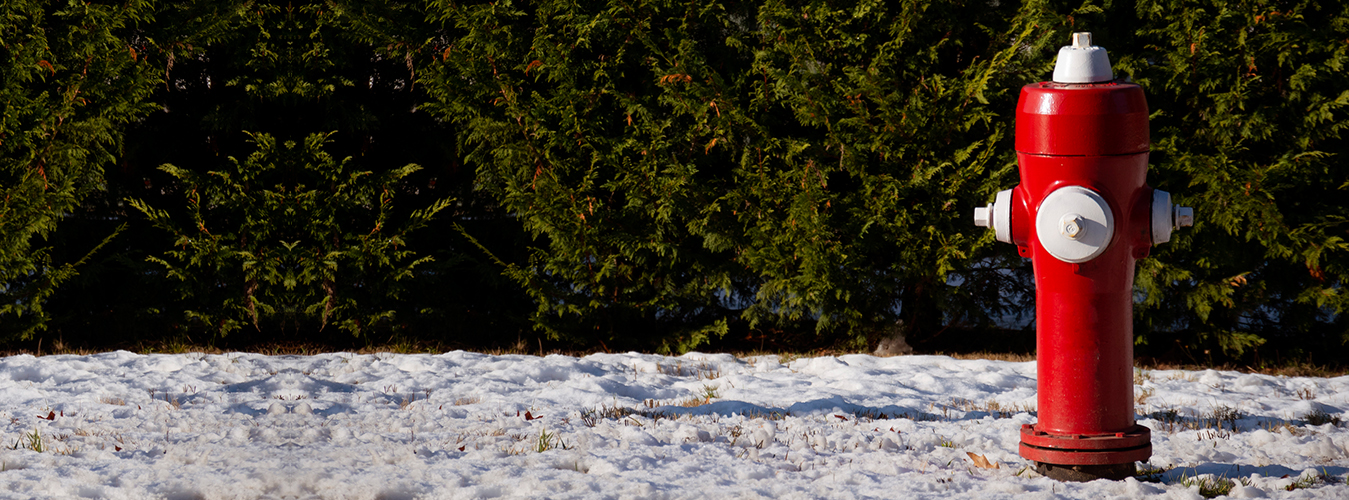
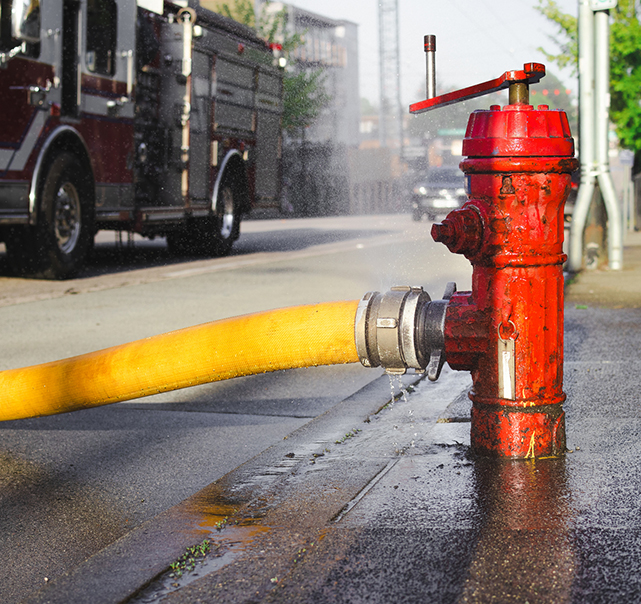
In compliance with the BC Fire Code, every fire hydrant (also known in the USA as a fire plug or Johnny Pump in New York) must be in working condition at all times and go through an annual fire hydrant inspection.
Damage of fire equipment is common in winter time, especially here in BC. This creates a liability for corporations and municipalities if there is an equipment failure during an emergency situation. For this reason, a semi-annual spring inspection and a fall inspection take place. Proper servicing of fire hydrants after use by the fire department or an extensive flow such as flushing of mains is also recommended by all fire hydrant manufacturers and fire safety companies.
A fire hydrant spring inspection is performed to ensure well working order of the fire hydrants and assess any damage caused by winter conditions. Winter conditions cause rust and corrosion of caps and threads. When damage occurs to these parts it makes them difficult to remove which results in water accumulation in the hydrant barrel. Too much water in the barrel can cause leakage of the main valve. It can also damage or plug the drain valve.
A fire hydrant fall inspection is performed to ensure that the main valve isn’t leaking and can drain properly. An inspection is also performed to catch any obstructions that may have been caused by winter. If water accumulates in the barrel and freezes over, this could plug the main valve later on. Another part of the inspection is to detect readiness so that the fire hydrant will function as required. The overall condition of the fire hydrant is also evaluated. As required by code, an inspection report is submitted and any damage to parts is either repaired or replaced.
A new installation is required if the fire hydrant is old and has undergone too much damage for a repair. If the fire hydrant is due for a replacement, we then make the necessary arrangements with the fire authorities. We then perform a complete fire hydrant teardown with the isolation valve in a closed position. The isolation valve is closed to prevent water from escaping. The fire hydrant is then completely replaced, including all fire hydrant gaskets and o-rings. Fire hydrant gaskets keep pipes from leaking. The o-ring helps the parts move freely. Once this is completed a fire hydrant flow test is done to make sure water drainage is working correctly and that the fire hydrant has sufficient water pressure.
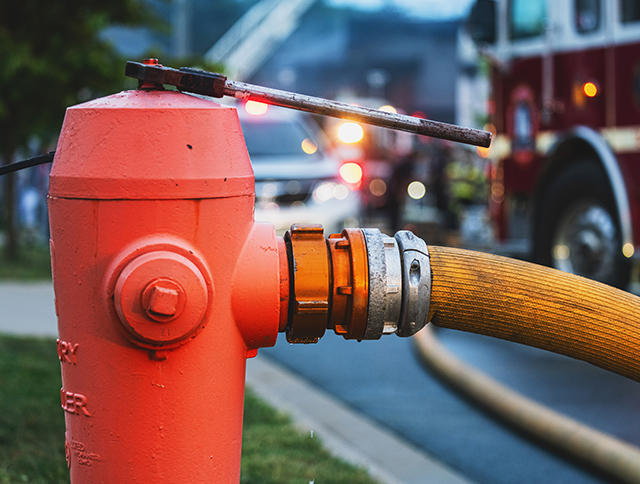
Here are common definitions to fire hydrant parts and related fire fighting equipment.
First Aid Hose Reel – A reel where a fire hose is wound so that the fire hose can be quickly unwound.
Fire Hose – A portable, flexible pipe that carries water. It can be hooked up to the fire hydrant to provide water to desired areas laid out by a sprinkler system or used by itself.
Branch Pipe – This pipe is connected to the sprinkler head. It is fire resistant and carries water to the fire hydrant.
Water Monitor – The water monitor makes sure there is enough water available for a fire hydrant to dispense.
Flow switches – Switches that make sure there is a steady stream of water flowing into the fire hydrant.
Pressure Switches – Switches that adjust the amount of water pressure for a fire hydrant.
Multi-stage High Pressure Pump – A pump that delivers water to feed the fire hydrant and sprinkler system with the right amount of force.
Jockey Pump – A pump that gives the right amount of water pressure. This is adjusted for each unique system’s needs.
Isolation Valve – The isolation valve is near the top of where the main valve connects to the fire hydrant. Its purpose is to isolate a portion of the water at any given time in order to maintain water pressure and flow accuracy.
Fire Hydrant Main Valve – This valve is connected to the main pipe which goes right up to the fire hydrant.
Now that we have gone over the different components of a fire hydrant, we will talk about how a fire hydrant works. Fire hydrants function mainly as a full-on, full-off tap into the main water supply. In areas with cold winter conditions, the main valve and drain valves are located underground below the frost line. They are then connected to the hydrant by a shaft, also called a dry barrel. The dry barrel prevents water accumulation and freezing during winter.
The other type of fire hydrant is called a wet barrel which is used in warm areas. With a dry barrel it is that it is possible to turn the water supply on and off to each port.
By itself, the hydrant doesn’t maintain sufficient pressure to expel the water through a fire hose. That is why pumping systems are needed to supplement pressure. Fire fighters will connect the hose from the clapper-valve of the fire hydrant to their fire engine. In a building equipped with sprinkler system, a jockey pump or high pressure pump is also required.
Call us at 604-590-0149 or fill out the form to the left for your fire hydrant annual servicing, repair, replacement or even a fresh installation. Our work is guaranteed and certified to meet the BC Fire Code and BC Building Code standards and regulations. We will also make sure that your fire hydrant is compliant with your municipality’s by-law. These measures are important to maintain life safety in the event of a fire and also to protect your interests from potential liabilities. Be fire safe and call us at 604-590-0149!
FAQ
In British Columbia, fire hydrants typically undergo semi-annual inspections (twice a year). Active Fire recommends:
Winter is the biggest enemy of fire hydrants in Canada.
Spring: We check for “winter hang-over” damage—rust, corrosion on caps, or water accumulation that might have caused internal stress.
Fall: The priority is drainage. If a hydrant doesn’t drain completely, water trapped in the barrel can freeze, cracking the casing or blocking the main valve, rendering it useless in an emergency.
Yes. Compliance with the BC Fire Code and municipal bylaws is required. Property owners (private hydrants) and municipalities are liable if a hydrant fails during an emergency due to negligence. Keeping records of these inspections is also a legal requirement.
Dry Barrel (Standard in BC): Designed for cold climates. The main valve is located underground (below the frost line). When the hydrant is off, the upper barrel drains completely so there is no water inside to freeze.
Wet Barrel: Used in warm climates where freezing is not a concern. The barrel is always filled with pressurized water.
Active Fire primarily services and installs Dry Barrel hydrants to suit British Columbia’s climate.
If a Dry Barrel hydrant fails to drain, the trapped water will freeze and expand. This can cause the iron casing to crack, damage the gaskets, or freeze the valve shut, making it impossible for firefighters to open the hydrant when they need it most.
A flow test measures the water pressure and volume (gallons per minute) available at the hydrant. This ensures that:
This is usually due to lack of lubrication or corrosion on the threads. During an inspection, technicians clean and lubricate the nozzle threads and operating nuts. If they are seized, it can delay firefighters significantly.
The isolation valve is a secondary shut-off valve located on the underground pipe connecting the hydrant to the water main. It allows technicians to cut off water to the hydrant without shutting down water to the entire street or building, enabling repairs or complete hydrant replacement.
Replacement is required if the hydrant is too old, parts are obsolete, or if the barrel/casing has suffered irreparable damage (often from vehicle impact or severe freezing). Active Fire handles the coordination with fire authorities and manages the complete excavation and installation process.
Yes. Many commercial properties, townhome complexes, and industrial sites have private hydrants that are the responsibility of the property owner/strata, not the city. Active Fire services both private and municipal hydrants.
You can call Active Fire directly at 604-590-0149 or fill out the request form on the website to schedule your Spring or Fall inspection.
Active Fire has been serving the Lower Mainland and Fraser Valley for over 25 years. We service Vancouver, Surrey, Burnaby, Delta, Richmond, Coquitlam, Port Coquitlam, New Westminster, Langley, Abbotsford, Chilliwack, Pitt Meadows, Port Moody, Maple Ridge, North Vancouver, West Vancouver, and surrounding areas.
