February 11, 2026
Mircom Fire Alarm Systems and Control Panels – Flexible Protection for Every Building
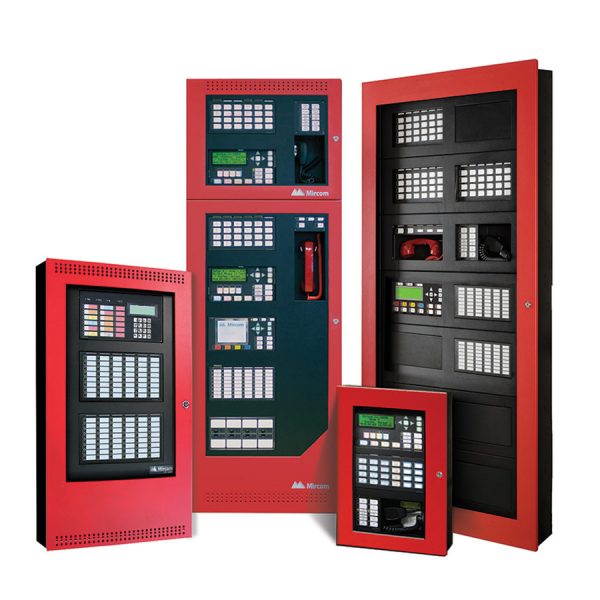
Mircom is a long standing leader in fire detection and life safety, with systems designed to protect everything from small commercial spaces to large, networked campuses. Instead of a “one size fits all” approach, Mircom organizes its fire alarm offerings into three main system types:
- Addressable fire alarm systems
- Conventional fire alarm systems
- Network fire alarm systems
Here’s a clear breakdown of what each type does, where it fits best, and how they can support a modern life safety strategy.
Addressable Fire Alarm Systems
Addressable systems are designed for smarter detection, easier troubleshooting, and better visibility across a building. Each device, whether a smoke detector, heat detector, module, or pull station, has its own unique address, so the panel can pinpoint exactly where an event is happening.
Key advantages of Mircom addressable systems
- Precise device identification:
The panel can display the exact device and location in alarm, trouble, or supervisory, helping responders act faster.
- Scalability for growing buildings:
Addressable systems are well suited for small to large facilities and can be expanded with additional loops and devices as needs change.
- Flexible programming:
Inputs and outputs can be programmed in detail, allowing custom cause and effect logic, staged evacuations, and tailored responses for different areas.
- Reduced wiring complexity:
Devices share communication loops instead of requiring individual home run wiring, which can simplify installation and future modifications.
Typical applications
- Office buildings and mixed use commercial spaces
- Schools and post secondary campuses
- Healthcare facilities and care homes
- Industrial and warehouse environments
- Larger residential complexes and high rises
If you need detailed event information, room level visibility, and long term flexibility, a Mircom addressable system is usually the right starting point.
Conventional Fire Alarm Systems
Conventional systems are a straightforward, cost effective option for smaller buildings or projects where zoning by area (rather than by individual device) is sufficient.
In a conventional system, devices are grouped into zones. When a device in a zone activates, the panel indicates that zone is in alarm, but not the specific device.
Key advantages of Mircom conventional systems
- Simplicity:
Easy to understand, operate, and maintain. Ideal for smaller facilities or basic retrofit projects.
- Cost effective protection:
Fewer programming requirements and simpler wiring can make conventional systems a budget friendly option for low to moderate complexity buildings.
- Reliable, proven technology:
Conventional fire alarm systems have been used for decades and remain a solid choice where detailed addressability isn’t required.
Typical applications
- Small commercial units and retail spaces
- Standalone restaurants and small offices
- Low rise buildings with limited zones
- Simple retrofit or replacement projects
If your building is relatively small and you don’t need device level detail, a Mircom conventional system can provide dependable protection without unnecessary complexity.
Network Fire Alarm Systems
Network fire alarm systems are designed for large, multi building, or highly complex facilities where multiple panels need to communicate and operate as a coordinated life safety network.
Mircom’s networked solutions allow multiple addressable panels to be linked together, sharing information and events across a high speed network.
Key advantages of Mircom network systems
- Centralized visibility:
Events from multiple buildings or areas can be viewed and managed from one or more central locations.
- Scalable architecture:
Panels can be added to the network as a site grows, supporting campuses, industrial sites, and large commercial portfolios.
- Coordinated response:
Networked systems can share alarm, supervisory, and trouble information, enabling building wide or site wide response strategies.
- Integration potential:
Network platforms are often used as the backbone for integrating voice evacuation, graphical workstations, and other building systems.
Typical applications
- Campuses and multi building sites
- Hospitals and large healthcare facilities
- High rise towers and mixed use complexes
- Industrial plants and logistics hubs
- Large commercial or institutional portfolios
If you’re managing multiple buildings or a large, complex facility, a Mircom network fire alarm system can tie everything together into one cohesive life safety platform.
How to Choose the Right Mircom System Type
When deciding between addressable, conventional, and networked Mircom systems, it helps to consider:
- Building size and layout:
Larger or more complex buildings benefit from addressable or networked systems; smaller spaces may be well served by conventional.
- Required level of detail:
If you need to know exactly which device is in alarm, addressable is the way to go.
- Future expansion plans:
If your site may grow or connect multiple buildings over time, starting with an addressable system that can be networked later is often a smart strategy.
- Code and insurance requirements:
Local regulations and insurer requirements may influence which system type is appropriate.
Mircom Fire Alarm Systems with Professional Design, Installation, and Service
Choosing the right Mircom system type is only part of the equation; proper design, installation, verification, and ongoing maintenance are critical to performance and compliance.
Active Fire works with Mircom fire alarm systems across the Lower Mainland and Fraser Valley, including:
- System design and upgrades
- New installations and retrofits
- Testing, inspection, and verification
- Repairs, troubleshooting, and ongoing maintenance
If you’re planning a new project or considering an upgrade from an older panel, we can walk you through whether an addressable, conventional, or network Mircom solution makes the most sense for your property.
Ready to talk about Mircom for your facility?
Get in touch with our team and we’ll help you match the right Mircom fire alarm system to your building’s needs, budget, and long term life safety strategy.