
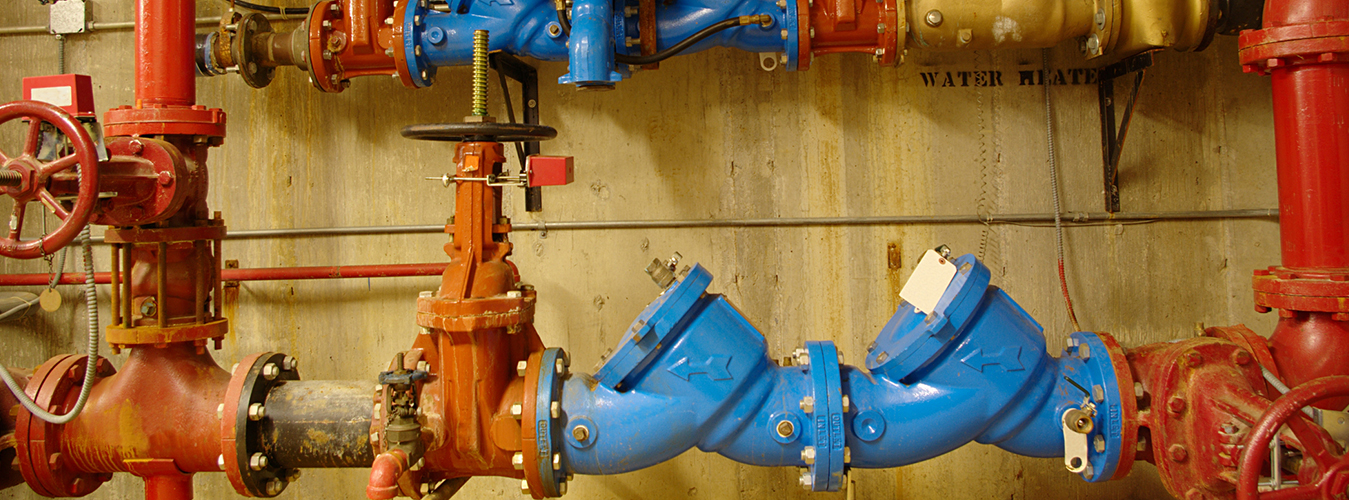
Active Fire and Safety Services has a team of certified backflow preventer technicians who provide a full range of backflow prevention services from inspections, tests, installations, repair and replacement. All work is done to municipal standards and approvals.
Jump to a section on this page:
The Canadian Standards Association (CAN/CSA B64.10 4.5.2) refers to similar backflow prevention devices on fire and domestic water services of all classes. This is based on the highest hazard presented by the building or its use. This enforces the code in a way to provide enhanced protection to the potable water system regardless of the potential hazard, be it high or low.
Water safety regulators have established a scale of potential hazards for potable water systems. Each type of potable water system has its own set of specific equipment that needs to be used. Fire suppression chemicals, antifreeze fluid and the auxiliary water supply are all elements that our certified technicians will consider to ensure proper public safety and BC Fire Code, BC Building Code, AWWA and CSA compliance.
BC Building Code 1998 Section 7.6.2.1 Connection of Systems.
Connections to potable water systems are designed and installed so that non-potable water or substances can’t contaminate the system. Correct placement of the water treatment system is critical. It must be a safe distance from the auxiliary line so as to keep the public water supply free from contaminants.
We at Active Fire and Safety Services understand these threats and use backflow prevention system methods as set out by BC Building Code to be sure there is safe drinking water for all. A properly working and maintained backflow prevention system will trap contaminated water and keep it from flowing in the wrong direction.
All water purveyors have a responsibility to provide safe consumable water. Cross-connections in private premises and water purveyor’s sources can cause severe hazards. Backflow prevention devices are installed to protect the public water supply and therefore backflow preventer testing must be done on a regular basis.
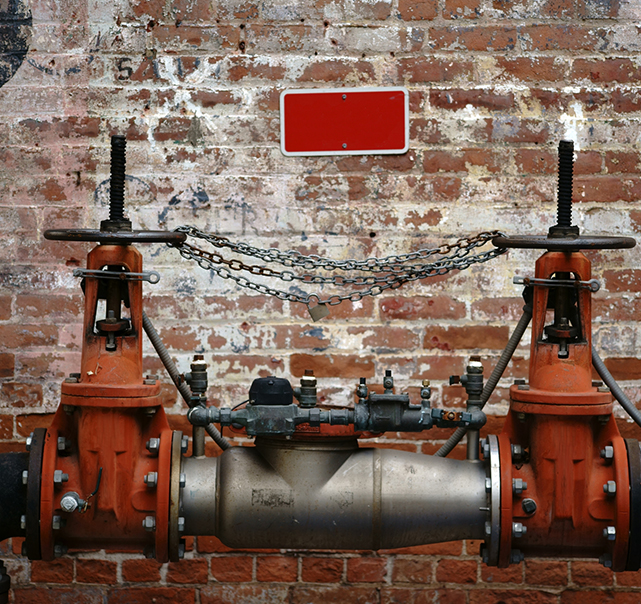
A backflow preventer consists of a set of valves that only allows safe water to flow into the system. There are several types of mechanical backflow prevention devices. The different types are used in different situations and for different levels of hazard. The main types are high, medium and low hazard.
These two different systems are used in cross-connection when a health hazard is present in the water supply that can cause sickness or death.
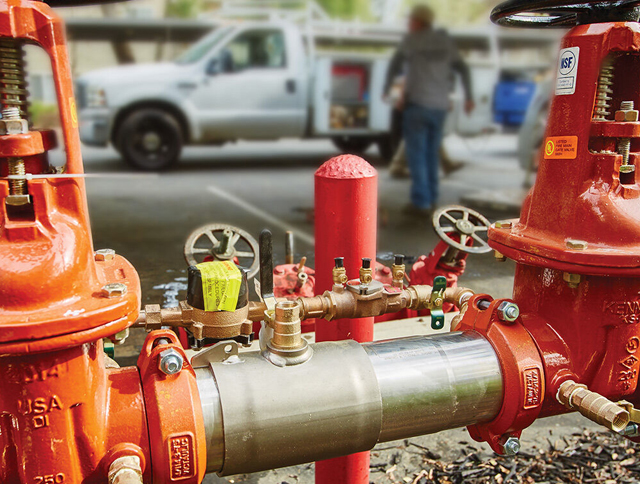
These two types of devices used in a non-health (non-toxic) hazards where a polluting substance may come in contact with potable water. This will affect the taste, odor or appearance of the water, but is not hazardous to health.
These are three low hazard devices that are commonly used which allow isolation of the water supply system as per regulations. The water has no hazards and this device is purely in place as per AWWA and regulatory body requirements.
Please visit the American Waterworks site for more details about how a backflow preventer works.
Contact us via the form to the left or call us at 604- 0149 for backflow preventer testing, maintenance and replacement services. We are fully compliant with BC Fire Code, BC Building Code, Vancouver and Greater Vancouver Building By Laws.
FAQ
Backflow is the unwanted reversal of water flow in a piping system. Instead of water flowing into your building from the city main, pressure changes can cause water from your building (which may be contaminated with chemicals, fire sprinkler water, or irrigation fertilizers) to flow back into the public drinking water supply. This poses a serious health risk to the community.
Backflow typically happens due to one of two physical conditions:
A backflow preventer is a mechanical plumbing device installed on your water pipes that acts as a one-way gate. It allows water to enter your building but physically prevents it from flowing backward, ensuring that any contaminants in your pipes stay contained within your property.
In virtually all British Columbia municipalities, backflow preventers must be tested annually. This is a mandatory requirement enforced by municipal water purveyors to ensure the device has not failed or become infiltrated by debris.
Tests must be performed by a BCWWA (British Columbia Water & Waste Association) Certified Cross Connection Control Tester. Standard plumbers cannot perform this test unless they hold this specific certification. Active Fire’s technicians are fully certified to test, repair, and tag your devices.
Yes, but only briefly. The testing process requires the water supply to the specific device to be isolated. Typically, the water is off for 15 to 30 minutes per device. We coordinate with you to schedule tests at convenient times to minimize disruption to your business or tenants.
Municipalities track these devices closely. If you fail to submit your annual test report, you may receive a compliance order or fine. In severe cases, the city has the authority to shut off water service to your property until the device is proven to be functioning.
These are the two most common types of devices:
A failed test means the internal seals or springs are no longer holding back pressure effectively. Remedies include:
An RP device is designed to drip or dump water if it senses a pressure fluctuation or a failure. If it is discharging a steady stream of water, it usually indicates that one of the internal check valves is fouled or broken, or the relief valve is stuck open. This requires immediate service.
Yes. After every test, our certified technicians complete the specific test report form required by your local municipality (e.g., City of Vancouver, City of Surrey). We submit a copy to the city on your behalf and provide you with a copy for your records, ensuring you remain fully compliant without the administrative hassle.
Yes. If you are constructing a new building, upgrading a renovation, or if your existing device is beyond repair, we can supply and install a new, code-compliant backflow prevention assembly tailored to your system’s size and hazard level.
Call Active Fire at 604-590-0149 or use the Contact Us form on our website. It is helpful to have your reminder letter from the city handy so we can confirm the specific device ID and location.
